 Carsey-Wolf Center at UC Santa Barbara
American Direct Cinema Revisited: An Afternoon with Gordon Quinn
- Saturday, May 30, 2026 / 2:00 PM - 4:30 PM (PDT)
- Pollock Theater
- Screening Format: 4K digital projection (Happy Mother's Day: 26 minutes; Home for Life: 82 minutes )
- With Gordon Quinn (filmmaker)
The Carsey-Wolf Center was delighted to welcome the legendary documentary filmmaker Gordon Quinn to the Pollock Theater for a discussion of his lifelong commitment to the direct cinema movement. Emerging between the late 1950s and early 1960s, direct cinema marked a major turning point in the history of American documentary filmmaking. These filmmakers developed an observational mode of filmmaking by abandoning the use of traditional storytelling devices such as written scripts, interviews, and voiceover narration; it is often described as “a fly-on-the-wall” style. Quinn joined this revolutionary film movement in 1966 when he cofounded Kartemquin Films, an independent film collective, with Stan Karter and Gerald Temaner. Still operating today under Quinn’s leadership, Kartemquin Films has produced a wide range of award-winning documentaries, including Steve James’s Hoop Dreams (1994) and Brent Huffman’s Saving Mes Aynak (2014).
This event opened with a screening of Richard Leacock and Joyce Chopra’s short documentary Happy Mother’s Day (1963), which centers on the family of the first surviving quintuplets born in the US. Quinn first encountered this film when he was an undergraduate student, and it inspired him to become a documentary filmmaker. Next, we screened Quinn’s first film Home for Life (1966), which depicts the experiences of two elderly people in their first month at a home for the aged. One is a woman whose struggle to remain useful in her son and daughter-in-law’s home is no longer appreciated. The other is a widower without a family, who suddenly realizes he can no longer take care of himself. The film offers an unblinking look at the feelings of the two new residents in their encounters with other residents, medical staff, social workers, psychiatrists and family. Home for Life was restored in 2007 thanks to a National Film Preservation Foundation grant.
Filmmaker Gordon Quinn joined moderator Naoki Yamamoto (Film and Media Studies, UCSB) for a post-screening discussion of the two aforementioned films, the direct cinema movement, and Quinn’s own career.
Biographies
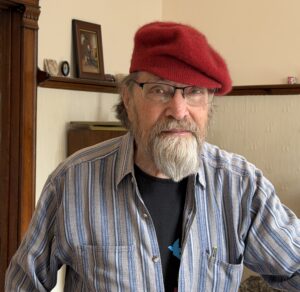
Gordon Quinn (filmmaker)
Gordon Quinn is the Artistic Director and founder of Kartemquin Films. His documentary credits include Home for Life, Taylor Chain, The Last Pullman Car, Golub, Hoop Dreams, Vietnam, Long Time Coming, Stevie and The New Americans. Recently, he directed For the Left Hand, Prisoner of Her Past, A Good Man, and 63′ Boycott, which was shortlisted for an Academy Award. He was executive producer for The Interrupters, The Trials of Muhammad Ali, The Homestretch, Life Itself, and America to Me, as well as for the Oscar-nominated films Edith and Eddie, Abacus, and Minding The Gap. Gordon helped create the Documentary Filmmakers’ Statement of Best Practices in Fair Use and speaks on public media, fair use, and documentary ethics.
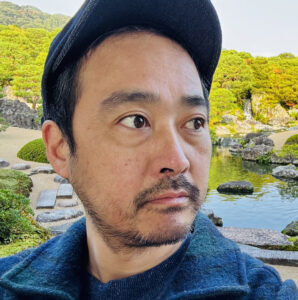
Moderator Naoki Yamamoto (Film and Media Studies, UCSB)
Naoki Yamamoto specializes in film theory, Japanese cinema, Marxist criticism, documentary films, avant-garde art, post-colonial studies, and Japanese cultural history. His book Dialectics without Synthesis: Japanese Film Theory and Realism in A Global Frame explores Japan’s active but previously unrecognized participation in the global circulation of film theory during the first half of the twentieth century. He has published widely in both English and Japanese, covering topics such as the reception of early American cinema in 1910s Japan, wartime Japanese-German film co-productions, Japanese New Wave filmmakers of the 1960s, and recent Hollywood blockbuster films.
This event is sponsored by the Carsey-Wolf Center and the James Hayman (’75) fund for CWC Classics.
CWC Docs
The Carsey-Wolf Center is committed to screening documentaries from across the world that engage with contemporary and historical issues, especially regarding social justice and environmental concerns. Documentaries allow filmmakers to address pressing issues and frame the critical debates of our time.
CWC Classics
The CWC Classics program celebrates cinema’s rich history, bringing classic films back to the big screen for critical viewing and discussion. These events feature filmmakers, academics, and professionals who can contextualize the production and historical impact of the films. The series occasionally presents classic films in their original 16 or 35 mm formats. CWC Classics events celebrate the history and significance of cinema’s enduring legacy.
Storytelling for the Screen
Since their emergence, cinema and television have been in a state of constant technological and industrial flux. But even as our ways of distributing and accessing moving images have changed, and even as tastes and styles continue shifting with the times, our passion for compelling onscreen storytelling persists. At the Carsey-Wolf Center, we are committed to fostering a nuanced understanding of cinematic and televisual storytelling across genres, formats, styles, and historical periods. To this end, we sponsor a wide range of events, programs, and workshops designed to cultivate a new generation of media storytellers, and to help audiences better understand the evolving role of narrative across diverse media forms.