 Carsey-Wolf Center at UC Santa Barbara
Storytelling for the Screen:
The Artful Dodger
- Tuesday, March 10, 2026 / 7:00 PM - 9:00 PM (PDT)
- Pollock Theater
- Screening Format: 4K digital projection (60 minutes)
- With James McNamara (series creator)
-
Starring: Thomas Brodie-Sangster, David Thewlis, Maia Mitchell, Luke Bracey
The Artful Dodger returns in season 2, and Jack is in deep trouble. He’s got a date with the noose, he’s being hunted by Inspector Boxer, Port Victory’s new lawman, and if he sees the woman he loves, Lady Belle, he’ll be hung. With Boxer competing with Jack for Belle’s affection, the crafty Fagin drags him into their most dangerous heist yet, and a killer is on the loose. Get ready for an explosive season of new characters and locations with more love, loss, invention, and deception than ever. The Dodger is in.
Following our screening of The Artful Dodger season 2, episode 1 “Hangman,” series creator James McNamara (Film and Media Studies, UCSB) joined moderator Ross Melnick (interim Director of the Carsey-Wolf Center) for a discussion of the series and its creation.
Biographies

Series creator James McNamara (Film and Media Studies, UCSB)
James McNamara is the creator, head writer, and executive producer of the critically-acclaimed international Disney+ and Hulu series The Artful Dodger. Season 1 was nominated for seven Australian Academy Awards (AACTAs) and McNamara was nominated for an Australian Writers’ Guild Award for writing the pilot episode. McNamara’s work as a writer and showrunner is defined by language-driven, actor-centred drama. His formation includes conservatory training in writing, directing, and classical performance at the National Institute of Dramatic Art and the Bell Shakespeare Company; screenwriting training at Australia’s national film school, the Australian Film Television and Radio School; and a PhD in English Literature from the University of Oxford. Alongside his creative practice, McNamara is an Associate Professor of Teaching in the Film and Media Studies Department at UC Santa Barbara.
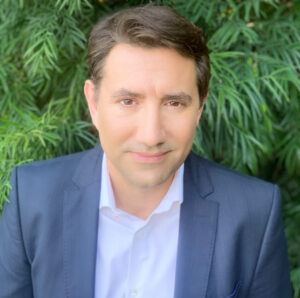
Moderator Ross Melnick (Film and Media Studies, UCSB)
Ross Melnick is Professor of Film and Media Studies at UC Santa Barbara and Interim Director of the Carsey-Wolf Center. He was named an Academy of Motion Picture Arts and Sciences Film Scholar and a National Endowment for the Humanities Fellow for his book Hollywood’s Embassies: How Movie Theaters Projected American Power Around the World (Columbia University Press, 2022). He is the author of American Showman: Samuel ‘Roxy’ Rothafel and the Birth of the Entertainment Industry (CUP, 2012), co-editor of Rediscovering U.S. Newsfilm: Cinema, Television, and the Archive (AFI/Routledge, 2018), and co-author of Cinema Treasures (MBI, 2004). His research has appeared in Journal of Cinema and Media Studies, Film History, The Moving Image, Historical Journal of Film, Radio and Television, and in numerous other journals and edited collections.
This event is sponsored by the Carsey-Wolf Center.
Storytelling for the Screen
Since their emergence, cinema and television have been in a state of constant technological and industrial flux. But even as our ways of distributing and accessing moving images have changed, and even as tastes and styles continue shifting with the times, our passion for compelling onscreen storytelling persists. At the Carsey-Wolf Center, we are committed to fostering a nuanced understanding of cinematic and televisual storytelling across genres, formats, styles, and historical periods. To this end, we sponsor a wide range of events, programs, and workshops designed to cultivate a new generation of media storytellers, and to help audiences better understand the evolving role of narrative across diverse media forms.
CWC TV
In recognition of the extraordinary accomplishments of the Center’s namesakes, Dick Wolf and Marcy Carsey, the Carsey-Wolf Center is committed to examining television as an institution, industry, and cultural form. In our post-network, multi-channel, multi-media environment, understanding television demands understanding its past as well as its future, through exploration of individual episodes, mini-series, and documentaries.